
High-rise's Negligence Led to Zero Fire Alarms as Woman Burned to Death
See how trial attorney Bob McLaughlin used 3D fire timeline and pathology animations to win a $5M high-rise wrongful death settlement.
Watch the Case FeatureA property management company created a deathtrap unbeknownst to the residents of an apartment high-rise in Chicago. Every unit was supposed to be equipped with both a smoke and a carbon monoxide detector — along with inspections twice a year. In the event of a fire, alarms were meant to wail throughout the building, warning the occupants of danger. At the very least, building staff were expected to have been trained on how to handle a fire outbreak. Sadly, for an 81-year-old retired public school teacher named Ora, the property management company failed to follow various safety measures to avert a tragedy.
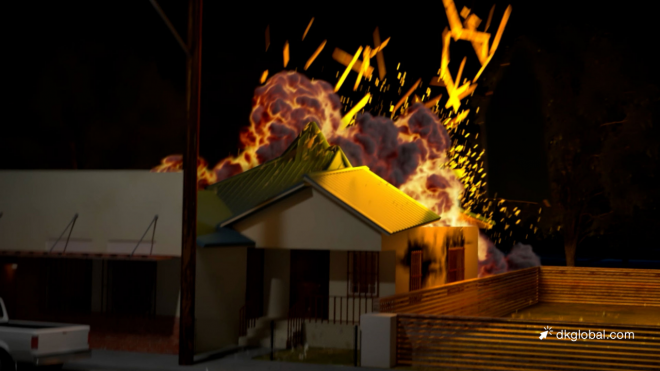
Ora lived on the 15th floor of the high-rise. In her apartment, two detectors silently blinked. Little did she know that neither was a smoke detector. Instead, the property management company had negligently installed two carbon monoxide detectors. Worse, neither device triggered on the day Ora fell asleep, and a fire erupted in her apartment. The flames spread throughout her room. However, when the smoke woke her, it was too late for her to escape. She paced around the room, searching for an exit as carbon monoxide filled her lungs. She collapsed to the floor, fell unconscious, and died as flames consumed her body. The blaze spread to the floors above, destroying multiple units and burning several survivors. Throughout the whole incident, not a single sprinkler activated, and residents and fire personnel never heard an alarm blare.
Ora’s son sought justice on behalf of his deceased mother and immediately reached out to Robert “Bob” McLaughlin, founding partner at Hart McLaughlin & Eldridge. Bob specialized in catastrophic bodily injury and wrongful death claims with a focus on jury trials. The fire had completely destroyed Ora's apartment, which made it difficult to determine what had caused the blaze. Bob brought on a fire safety systems expert to sift through the charred debris for answers.
The expert determined that there was no smoke detector in her apartment — only two carbon monoxide detectors. Bob discovered that the property managers were responsible not only for the smoke detector but for checking its functionality twice a year. This meant the property management company had around 40 opportunities to notice the missing smoke detector and install one, but they recklessly failed to do so. Bob also learned that the fire had spread rapidly due to exterior Styrofoam panels, which had acted as an accelerant. The more he investigated, the more violations he uncovered: untrained personnel, dysfunctional alarms, no sprinklers, and no fire safety plan.
The defense’s working theory on the case centered on the idea that because Ora was a smoker — she must have fallen asleep with a lit cigarette. They argued that under Illinois’s comparative negligence laws, she was more than 50% at fault for her death, and therefore, not entitled to compensation. But Bob knew the fire department had no definitive conclusions about what started the fire. Regardless of its origins, Bob felt confident that the compounding failures from the property owners would show Ora’s perilous situation. To demonstrate this, Bob turned to DK Global to create animations of the liability timeline and to illustrate the forensic pathologist’s medical opinion of Ora’s death.
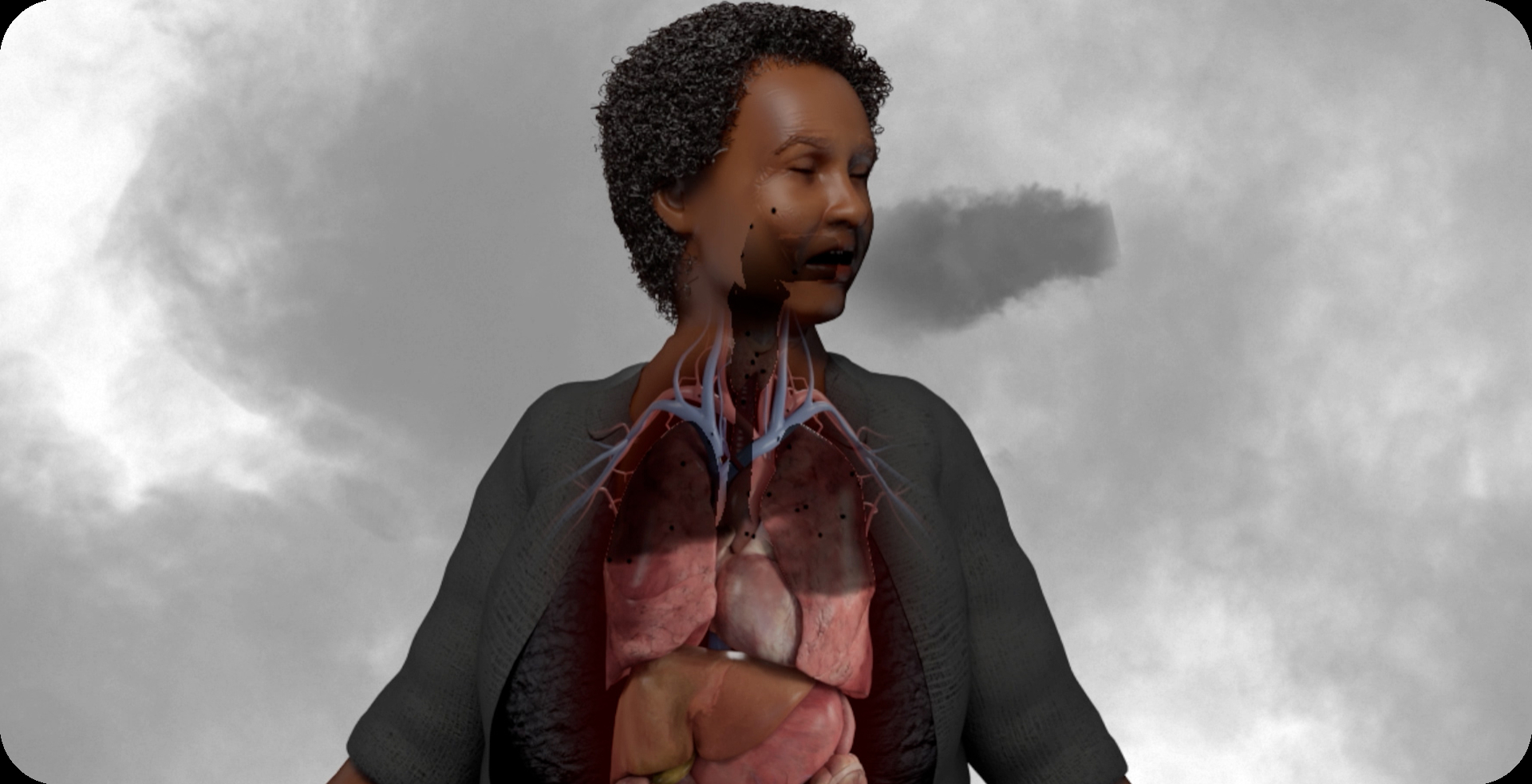
The DK Global animation opened with news clips of the fire, followed by snippets from the fire department's report detailing the lack of alarms. Then, pictures of the carbon monoxide detectors found after the fire were shown alongside undamaged models. Next, a 3D reconstruction of the apartment building showed the location of the fire while displaying the timeline of events. Fire safety violations were visually represented with pictures and icons. Finally, Ora's struggle against the smoke and carbon monoxide poisoning was animated. It showed how carbon monoxide entered her lungs and damaged the cells in her bloodstream. Her collapse was animated, followed by a photo of her charred remains.
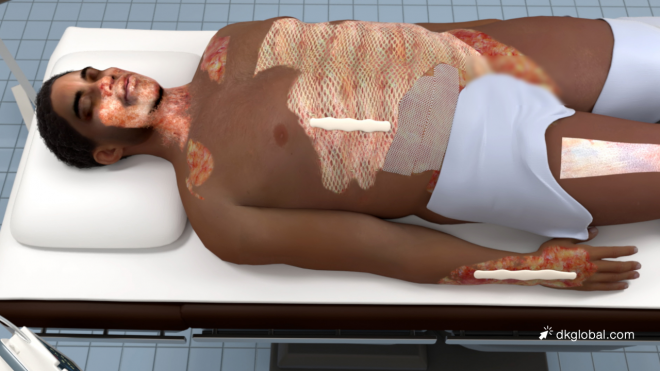
Leading up to trial, the defense made zero settlement offers. At the settlement conference, Bob played the DK Global animations for the mediator, defendants, and the insurance representatives. He sensed that the defense strongly did not wish for the jury to see the animation of Ora’s thermal burns and carbon monoxide poisoning. Shortly after, on the eve of trial, the defense came forward and settled the case for $5,000,000. While the money could never bring back his mother, Ora’s son was glad to finally see the defendants held accountable for their dangerous management of the high-rise.
Robert McLaughlin, founding partner at Hart McLaughlin & Eldridge, focuses on civil litigation, with an emphasis on jury trials and appellate work. He specializes in mass torts, class actions, catastrophic bodily injury, business litigation, and workplace harassment and discrimination cases. He has been recognized as an Illinois Rising Star (2009-2013), Emerging Lawyer (2015-2016), Illinois Super Lawyer (2014-2026), and Leading Lawyer (2017-2026).
We firmly believe that it was the DK Global animation that got this case settled. The animation showed the defendants not only that we were prepared to go to verdict, but also that we were prepared to — and we did — spend the necessary resources to obtain this state of the art animation.
 Animation
 Animation