
Head-on Collision Causes TBI After Oil Company Put Fatigued Worker on the Road
A fatigued oil truck driver caused a devastating crash. Discover how 3D injury visuals helped secure a massive settlement for the victim.
Watch the Case FeatureA lone two-lane highway cut across the flat roads of West Texas. Big trucks hauling oil rigging equipment dominated the straight stretch like bowling balls rolling along a conveyor. On a clear-sky day in May, an officer for a major oil services company assigned a driver to haul 30,000 pounds of equipment with an F-550 truck. No one cared that the driver had already worked a 16-hour day and well exceeded his Federal Motor Carrier Safety Administration (FMCSA) service limit. The driver took the wheel and dozed off multiple times as the hefty truck drifted in and out of the opposite lane. Coming from the other direction, another oil company employee was headed into work. A husband with his wife and two kids at home, he was coming up to the F-550 driver on the road. The driver hauling oil equipment nodded off, and his truck swerved out in front of the oncoming vehicle. The two trucks collided, head-on, corner-to-corner, with a screech of metal. The crash was so devastating that photos taken later made it impossible to believe that both men had survived.
Fueled by adrenaline, the 40-year-old oil worker stumbled out of the wreck. When ambulances arrived on scene, he was coherent enough to refuse their offer to take him to a subpar hospital. He instead found a ride to a better medical facility. At the hospital, doctors uncovered numerous injuries that had not been immediately visible after the crash. The oil worker suffered a traumatic brain injury (TBI), a tear of his left eye, and painful injuries along his spine, shoulder, elbow, and wrist. In the years that followed, he was unable to fully recover and required four separate surgeries on his eye, neck, back, and shoulder. He suffered from headaches and blurred vision due to his TBI, and he struggled to recall memories, process information, and articulate his thoughts. He was stuck on a long road to recovery that limited his ability to work or provide for his family — he needed help.
The victim’s lawyer referred the case to his friend, Jason Stephens, founder and lead trial lawyer at Stephens Law in Fort Worth, Texas. Jason’s firm focused exclusively on catastrophic injury and wrongful death cases with an emphasis on commercial vehicle crashes. From the outset, Jason understood that the defense had deep pockets and would be a formidable opponent. The oil services company even sent its lawyers and reconstruction experts to the scene within 90 minutes of the crash. Jason knew taking them on would require his own team of experts and a clear way to convey his client’s story.
To start, Jason dug into the oil service company’s policies and procedures. He found the company had a robust set of workplace safety rules — which they had failed to follow. On the day of the accident, the company’s officer did not perform any safety, fatigue, or journey assessments. The F-550 driver had worked 16 hours the day before, exceeding his service limits, and was running on fumes. Despite that, the company showed a reckless disregard for safety and put the exhausted employee behind the wheel. Jason also discovered that a police officer’s body camera captured the driver admitting he had fallen asleep and swerved into oncoming traffic. Depositions from fellow employees revealed that he had also drifted into the opposite lane not once, not twice, but four times before he hit the victim.
Rather than fight liability, the oil company’s team of lawyers focused their arguments on the plaintiff’s walking and talking normally after the crash. Jason knew the case hinged on making his client’s “invisible” medical picture into a story that everyone could see. He brought together a large team of experts, which included accident reconstructionists, fatigue and trucking experts, orthopedic surgeons, and neurosurgeons. He also reached out early in the case to DK Global to create an animation that captured the full extent of the victim’s injuries. He wanted to ensure insurance decision-makers, who often looked only at paper records, could connect with his client’s suffering.
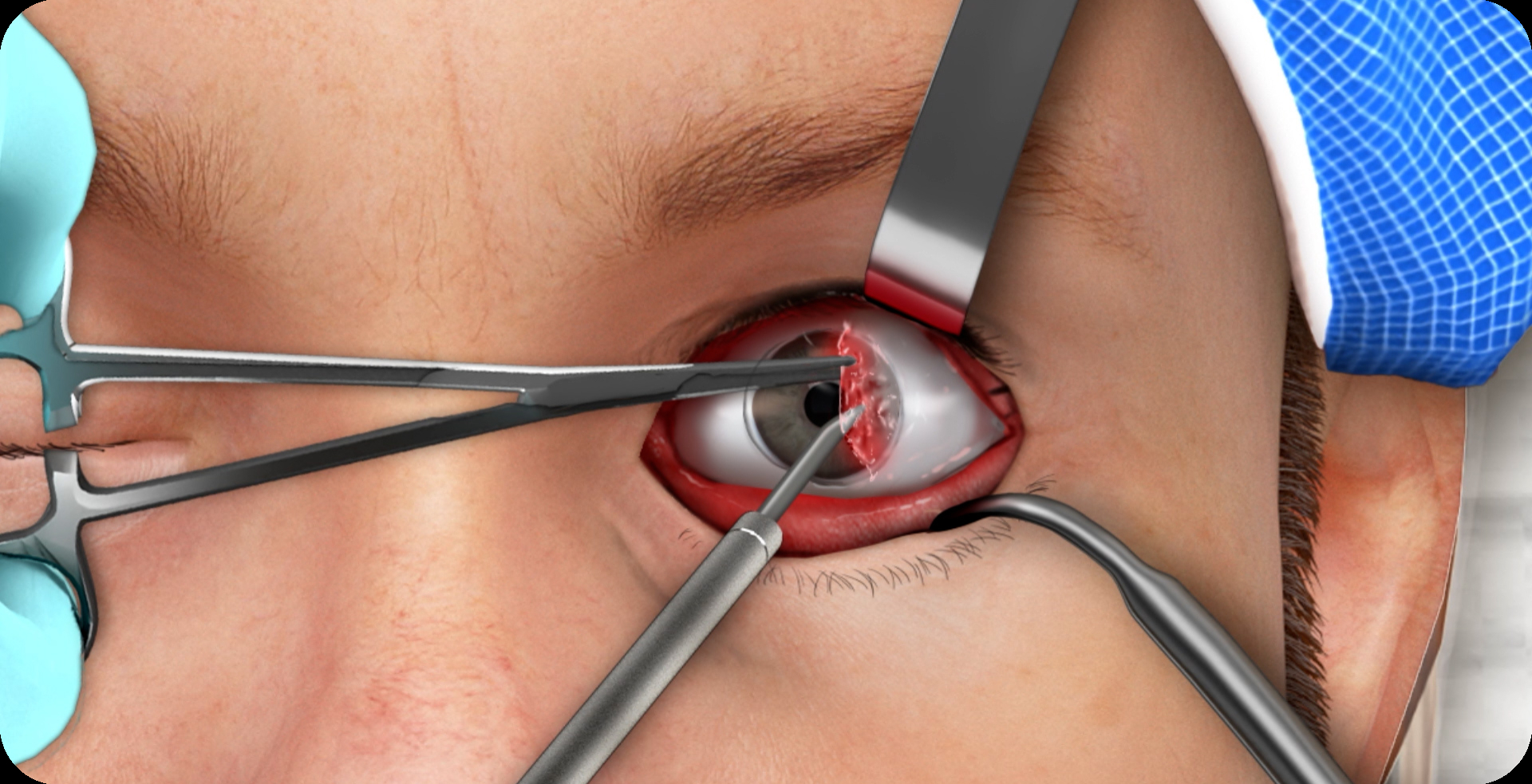
The 9-minute DK Global animation opened with a 3D model of the plaintiff with his skeletal injuries visible. It highlighted the trauma to show his overall medical picture. Next, the presentation illustrated his TBI by comparing his MRI imaging with a 3D cross-section of his brain. After that, the video depicted his left eye corneal abrasion/tear, followed by a detailed 3D recreation of his eye surgery showing the placement of his membrane graft. To illustrate how his eye injury affected him, a picture of the plaintiff and his children was contrasted against a "blurry" version. Following this, models of his lumbar and cervical spine showed the injuries found on his radiology imaging. His lumbar fusion and his cervical discectomy and fusion procedures were then animated. Finally, the surgical repair of the tear of his shoulder tendon was shown, followed by models of his carpal and cubital tunnel syndromes.
The defense presented no initial offers and did not engage in any pre-suit conversations. Jason put together a comprehensive demand package and embedded the DK Global animation, which he submitted 45 days before mediation. He also used the animation throughout the multiple mediation sessions that followed. It was not until the trial date neared that the defense eventually relented and settled the case for a confidential but very substantial sum. Jason found it rewarding to put his client in a position to move forward without worrying about his financial future
Jason Stephens, founder and lead trial lawyer at Stephens Law, focuses exclusively on catastrophic injury and wrongful death cases. He has practiced law for more than three decades and secured some of the largest verdicts in state and national history. In 2022 alone, he won the largest verdict in the United States on an electrical injury case. Throughout his career, he has recovered more than $300 million for his clients. He has been recognized repeatedly as a Texas Super Lawyer, one of the top 10 trucking lawyers in Texas, and holds a perfect 10.0 AVVO rating.
I think demonstratives certainly can help you get your case resolved faster but what I know for sure is that demonstratives can help ensure that you get maximum value for your case.
 Animation
 Animation