
Motorcyclist Rammed by City Bus Suffers Whole-Body Fractures and TBI
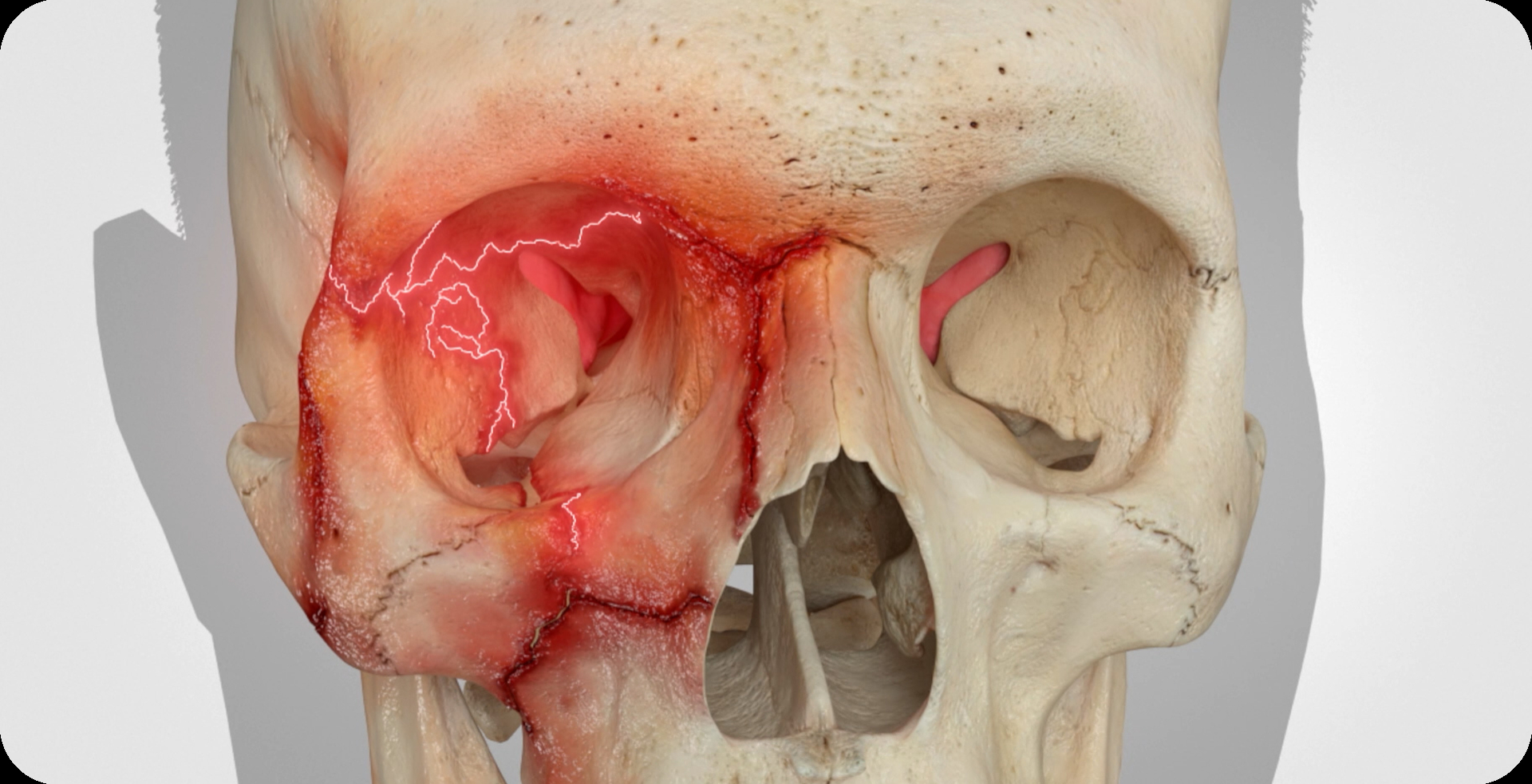
A motorcyclist suffered facial fractures, brain bleeds, a crushed sinus cavity, and multiple broken bones after crashing into a city bus.
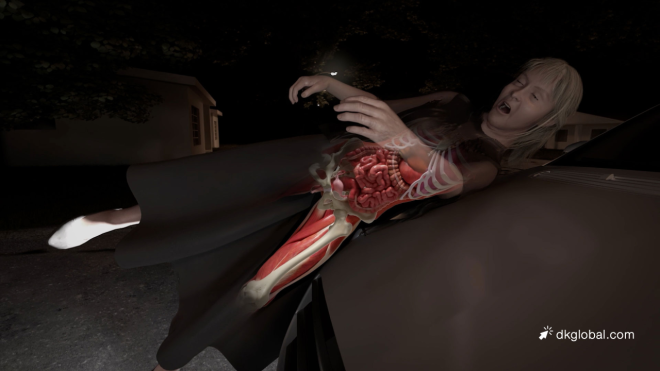
Watch the Case FeatureA 12-ton articulated city bus was en route to the Los Angeles International Airport bus terminal, waiting to turn left. Solid green light. No green arrow. Impatiently eager to avoid sitting through a red light, the driver accelerated through the intersection — despite not having right of way — directly into the path of an oncoming motorcyclist. The young rider, a man in his 20s, had no time to avoid the bus. He crashed into its side, the motorcycle bursting into flames. The impact left him catastrophically injured, comatose in the hospital, and in desperate need of legal help.
The collision caused devastating polytrauma. The motorcyclist suffered multiple brain bleeds, a traumatic brain injury, severe facial fractures, broken legs, and fractures throughout his body, including injuries to his frontal bone, sinus wall, teeth, elbow, knee, femurs, and sternum. His sinus cavity was crushed, and one of his eyes was so badly damaged that it protruded from the socket. Although he later made a remarkable recovery, the crash permanently altered his health, his emotional life, and his future in ways that would not be obvious to at passing glance.
Attorneys Brian Breiter and Chance Pardon of the Law Offices of Brian Breiter, LLP, became involved while their client was still unconscious. His father contacted the firm as the young man remained in a coma. Brian and Chance quickly realized they would need to prove both how the collision happened and what the injuries had truly taken from their client.
The first major issue was liability. Surveillance footage confirmed that the bus should not have made the left turn, but the attorneys also learned their client had been traveling at a relatively high speed. Knowing the defense would focus on comparative fault, they retained accident reconstruction, human factors, trucking and transit, and medical experts.
Next, the attorneys faced a challenge that often arises in catastrophic injury cases: by the time trial approached, the plaintiff looked far better than he had in the immediate aftermath. That created a risk that the defense could minimize damages by disputing the severity of what he had endured and the lasting impact of his brain and orthopedic injuries.
Brian and Chance responded by shaping a presentation strategy around what medical records and live testimony alone could not fully convey. They needed to show the jury not just a list of diagnoses, but the physical devastation of the crash, the hours-long surgical repairs, and the invisible consequences of traumatic brain injury. To do that, they brought in DK Global to create medical-legal visuals that translated the evidence into something the defense, mediator, and eventual jury could understand.
The presentation opened with the plaintiff’s head and facial injuries, highlighting the brow laceration, trauma to the right eye, the hematoma behind it, and the orbital, nasal, frontal bone, and sinus wall fractures. It then moved through fractures elsewhere in the body, including the teeth, elbow, knee, femurs, and sternum. From there, the animation shifted to the traumatic brain injury, showing the brain slice by slice and identifying the contusions and hemorrhages. It concluded with the cognitive and emotional consequences of frontal lobe damage, then used a bird’s-eye surgical view to show orthopedic hardware being inserted and removed as surgeons rebuilt the damaged bones.
The visuals became a critical tool as the case moved through multiple mediations and toward trial. They helped the medical experts explain the injuries with precision, and even the treating physicians were struck by the accuracy of the animations. More importantly, the demonstratives helped the mediator and defense appreciate the scale of the damages despite the client’s outward recovery. About a week before trial, the matter resolved for a $9,000,000 settlement, securing substantial recovery for the injured motorcyclist after a collision that had nearly taken his life.
The visuals became a critical tool as the case moved through multiple mediations and toward trial. They helped the medical experts explain the injuries with precision, and even the treating physicians were struck by the accuracy of the animations. More importantly, the demonstratives helped the mediator and defense appreciate the scale of the damages despite the client’s outward recovery. About a week before trial, the matter resolved for a $9,000,000 settlement, securing substantial recovery for the injured motorcyclist after a collision that had nearly taken his life.
Brian Breiter of the Law Offices of Brian Breiter, LLP focuses on cases involving personal injury, wrongful death, auto accidents, motorcycle crashes, and trucking accidents in California and Florida. He is a civil trial lawyer who has been in practice since 1995. Brian is a former adjunct professor at Pepperdine Law School, where he taught Improvisational Mediation. He continues to use his acting and storytelling abilities in the courtroom.
Chance Pardon is a lawyer at the Law Offices of Brian Breiter, LLP, and dedicates his work to helping those in need. He is a lead member of the firm’s litigation and trial teams and has taken dozens of cases to trial, with more than $19M in verdicts. He was a finalist for the prestigious 2020 Consumer Attorneys Association of Los Angeles Rising Star award.
XI had just done a trial [using a DK Global presentation]. We got a great verdict on that, a multi-million dollar verdict... We knew that if DK produced another amazing video for us, we'd have some great ammo. And it, of course, paid off.
 Animation
 Animation